
Vinyl plank is a completely waterproof material. It does not warp, swell, or react to moisture in any noticeable way, making it a carefree choice for spaces exposed to splashes, such as kitchens or hallways. Unlike tiled floors, vinyl has no grout lines that collect dirt and require constant cleaning. Everyday maintenance becomes much easier when the floor stays clean with regular vacuuming and wiping with a damp cloth.
Where Can Vinyl Plank Be Used?
Vinyl plank is a versatile flooring material suitable for all dry indoor spaces. It works well in rooms where the floor is expected to withstand wear, look attractive, and feel comfortable underfoot — for example, in kitchens, living rooms, hallways, and bedrooms. Only bathrooms are excluded, as they require a fully waterproof solution.
In Spain, tiled floors have traditionally been popular for their easy maintenance and excellent moisture resistance. In recent years, however, attention has turned to other flooring options that also offer durability, practicality, and beauty — and as a result, the range of available flooring materials in Spain is gradually diversifying.
A tiled floor can feel cold underfoot, especially during cooler seasons, as Spanish homes usually do not have underfloor heating. Vinyl plank offers a pleasant solution to this problem: its surface feels warm even without heating. Vinyl feels warmer because it conducts heat away from the skin more slowly than tile or laminate.
Easy to Install Over an Existing Tile Floor
One of the greatest advantages, is that vinyl plank can be installed directly on top of an existing tiled floor. So, if you’re looking for doing quicker fix, this might be your choice. This saves you from messy demolition work and speeds up the renovation considerably. Vinyl plank is installed as a floating floor, so the solid structure of the tile floor serves as an excellent base.
There are a few points worth noting during installation:
- When installing over tiles, the subfloor must still meet the usual requirements: it must be level, clean, and stable.
- The joints of the planks and tiles should not align exactly.
- When installing over tiles, it’s best to choose a vinyl plank with durable click-lock joints.
Because vinyl planks are thin, only about 4–6 millimetres, they don’t significantly raise the floor height, keeping the room’s sense of space unchanged.
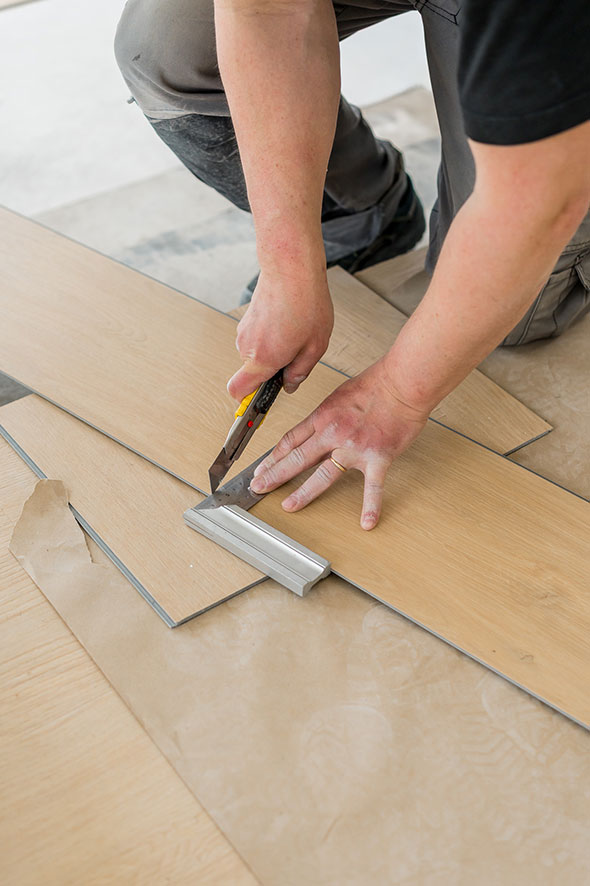
The planks are easy to click together with locking joints, and they can be cut conveniently with a utility knife, without the need for special tools. This makes vinyl plank an excellent option even for DIY renovators.
Practical and Low-Maintenance Choice
Why Choose Vinyl Plank?
Stone-composite vinyl plank is a durable choice both in Finland and under the southern sun. Unlike traditional PVC vinyl plank, which can expand too much in hot sunlight and cause problems, stone-composite vinyl remains stable. About 70% of its core is made of stone, which helps it retain its shape and minimizes movement caused by temperature changes. The floor thus remains smooth and neat even in warm conditions.
Vinyl plank is an excellent alternative because it does not react to changes in humidity, unlike wooden flooring, which can shrink and expand constantly depending on the climate. In Spain, humidity levels vary greatly both daily and seasonally, which can pose challenges for flooring materials.
Vinyl plank combines practicality, comfort, and stylish appearance. When installed over a tiled floor, it quickly gives the home a warmer and more contemporary look — without heavy demolition work. Vinyl is easy to install, simple to maintain, and resistant to the challenges of moisture. For these reasons, it is an excellent flooring choice for homes that value both functionality and living comfort.
Contact
Decorasi can help you make your home both functional and beautiful.
Get in touch and let’s design a space together that serves your daily life and delights the eye.
📧 [email protected] | 📞 +358 40 531 1551 | +34 722 164 702