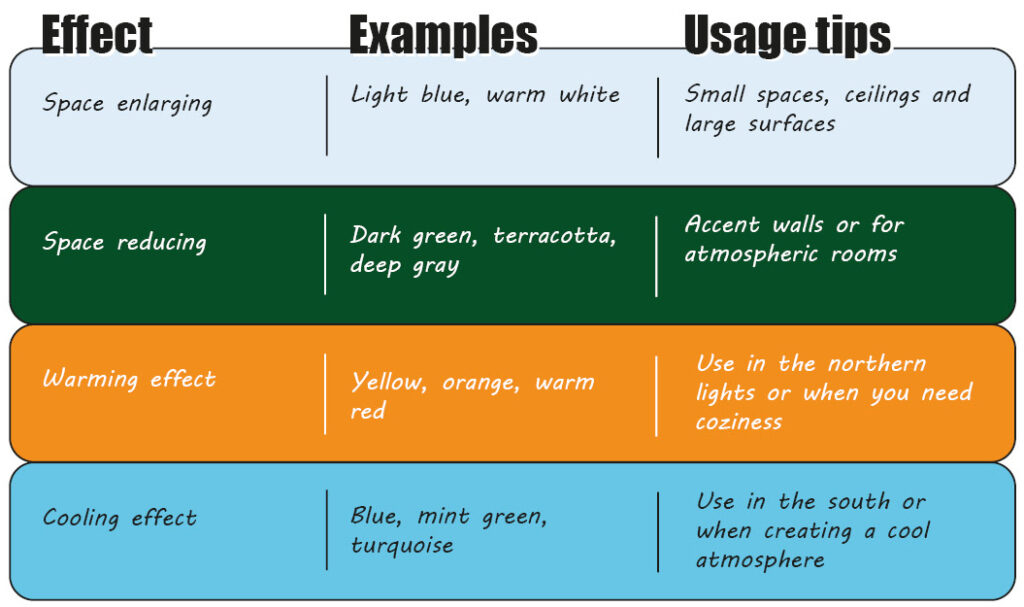
Colors are much more than beautiful surfaces – they affect mood, the sense of space, and the entire atmosphere of a home. This article provides interior design tips and insights on how to use colors effectively in different spaces.
Color Wheel, Contrasts and Complementary Colors in Interior Design
The color wheel is a useful tool for building balanced and dynamic interior schemes. Colors are divided into warm and cool tones, and their combinations directly influence the feel of a space.
With the color wheel, we can visualize various contrasts and color harmonies. You can choose complementary colors, analogous colors, or even a single color in various intensities (monochromatic schemes).
- High contrast (e.g. blue and orange) adds drama and rhythm – an excellent choice for bold, modern interiors.
- Low contrast works well in calm, harmonious Scandinavian styles.
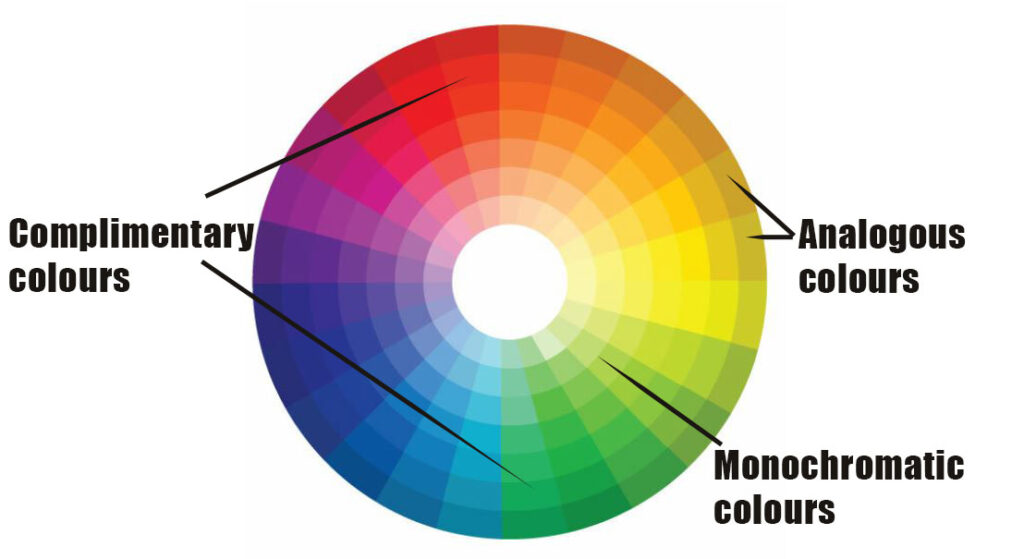
The color wheel helps to understand relationships between hues.
Warm colors such as shades of red, yellow and beige bring warmth to a space. A warm wall color can make a cool room feel psychologically warmer. Cool colors like blues, greens and greys bring freshness and calmness, creating an airy feel.
How the space feels
To make a room feel more spacious, use light colors (off-white, sand, light grey, pastels), cool hues (light blue, light green), and a unified color palette (monochromatic design). These shades reflect light well and make walls seem to ‘pull back,’ giving the space a more open feel. They are excellent choices for small rooms or homes with limited natural light.
If the goal is to make a space feel smaller and cozier, choose dark tones (deep blue, forest green, burgundy), use warm tones over large surfaces, or incorporate contrast with accent walls. These colors absorb light and make walls appear closer. They can create a pleasant, intimate atmosphere.
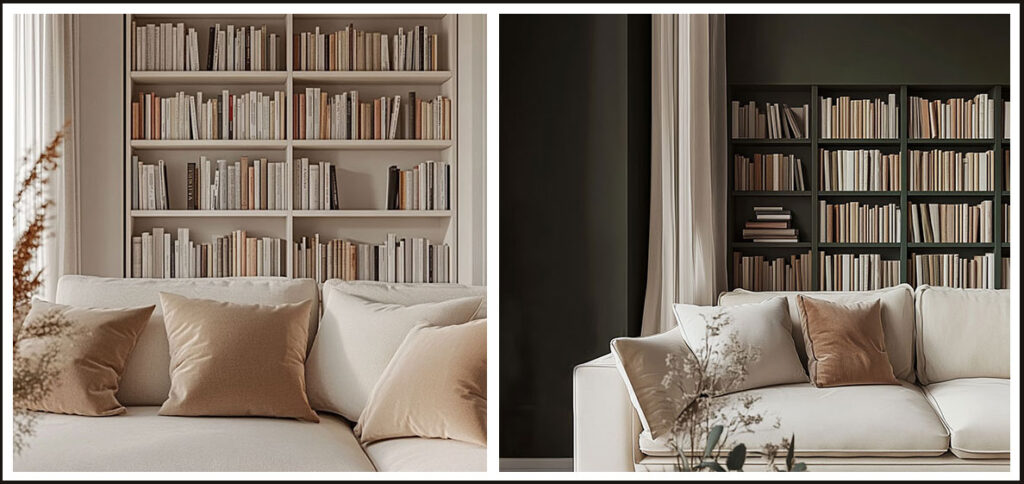
Light colors create spaciousness, while dark colors bring an intimate and warm ambiance.
Natural Light and Paint Colors – Interiors in Finland vs. Spain
Paint colors look different under various lighting conditions. The color and intensity of light significantly affect how we perceive color.
In Finland:
- Cool, diffuse light enhances bluish hues.
- Warm paint tones balance Nordic light.
In Spain:
- Bright, warm light enhances colors vividly.
- Muted and light tones calm the space and prevent oversaturation.
- In Spanish light, Moroccan-style interiors and colorful tiles truly come to life.
Color Is a Personal Experience
The experience of color is always subjective: ‘How do I perceive this color?’ Even though trends point us in certain directions, the best results come when color choices are based on your personal style and feeling.
Whatever your choice, don’t rely solely on store displays or digital samples. Always test colors in your actual space and in various lighting conditions. Natural light and reflected tones or shadows always influence how a color appears. Many designers agree on the fact that the most difficult colors to choose are white and grey — even though it might sound unbelievable. Testing shades in the actual space is the best piece of advice anyone can give you.
When choosing a paint color, a great method is to use a piece of plasterboard to test multiple shades. You can move the board between rooms to see how the color behaves in different spaces – especially if you’re planning to use the same shade in multiple rooms. When selecting fabrics, it’s often possible to take home a sample swatch to view it in the intended environment.